
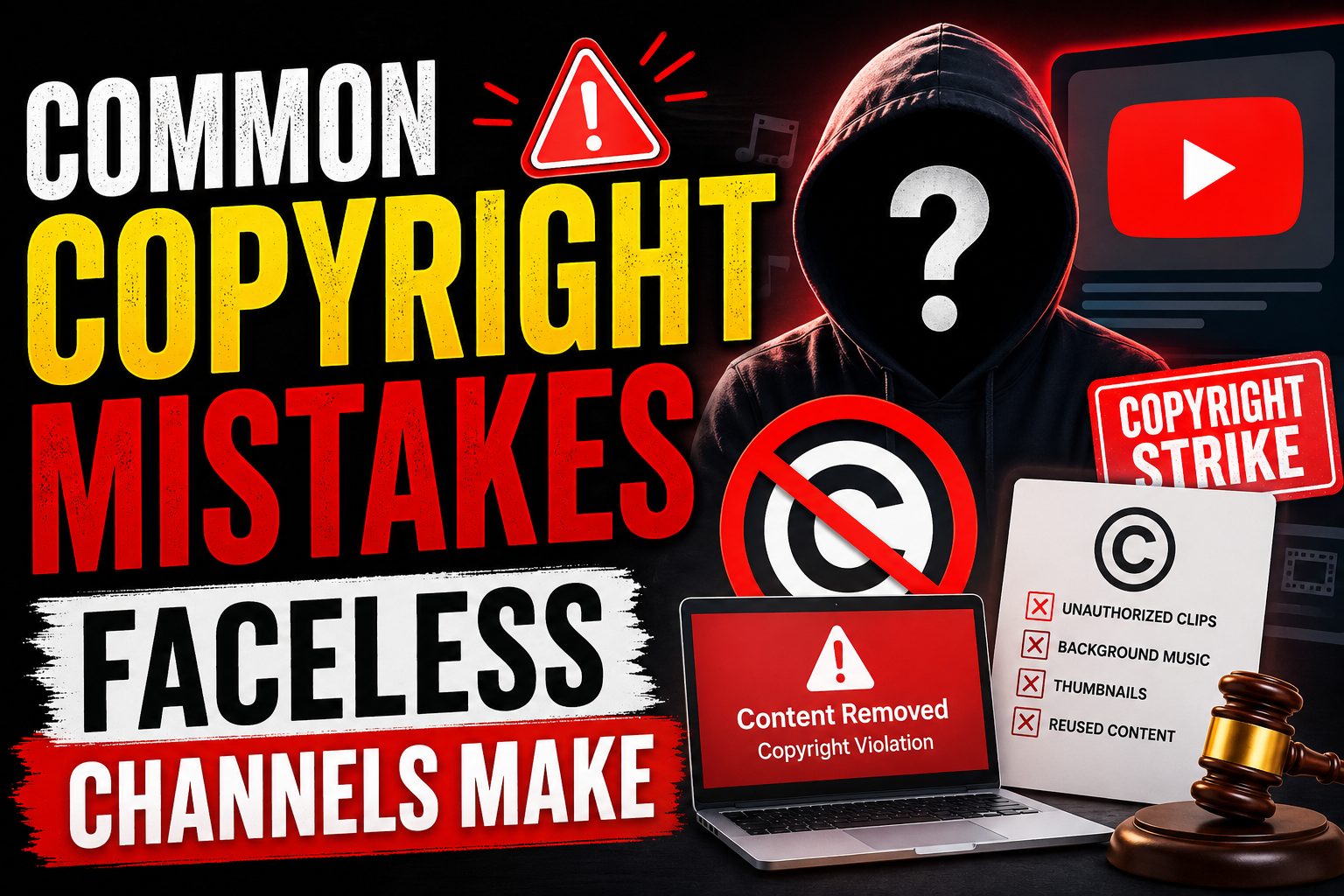
Introduction to Copyright in Content Creation
- Copyright is a crucial aspect of content creation that serves to protect the rights of creators over their original works. It is a legal framework that grants authors, artists, and other content producers exclusive rights to use their works and prevents unauthorized usage by others. For faceless channels, where content is often generated without a personal identity attached to it, understanding copyright laws becomes even more important, as these channels risk infringing on the rights of others and facing legal repercussions.
- The importance of copyright extends across various forms of media, including videos, music, images, and written content. Each of these media forms is eligible for copyright protection, which ensures that content creators are recognized for their efforts and have control over how their works are distributed and shared. This is particularly vital for faceless channels that may integrate diverse content from multiple sources, as the likelihood of unintentional copyright infringement increases in these scenarios.
- Furthermore, copyright laws help foster creativity and innovation by encouraging content creators to invest time and resources into developing new works, knowing that there are legal protections in place. For faceless channels, compliance with copyright regulations not only helps to avoid legal disputes but also builds credibility and trust with audiences. It is essential for these creators to educate themselves about copyright issues relevant to their specific content, as navigating the landscape of copyright can be complex, and violations can result in severe penalties.
Understanding Fair Use and Its Limitations
- Fair use is a legal doctrine that allows certain uses of copyrighted material without obtaining permission from the copyright owner. This concept is particularly pertinent to content creators, including those operating faceless channels, as it outlines circumstances under which they can use someone else's work legally. The key to understanding fair use lies in its flexibility and the various factors that courts consider when determining whether a specific use qualifies.
- Four primary factors contribute to the assessment of fair use. The first factor is the purpose and character of the use. Non-commercial, transformative uses—those that add new meaning or message to the original work rather than simply replicating it—are more likely to qualify as fair use. For instance, educational or commentary purposes are looked upon favorably.
- The second factor considers the nature of the copyrighted work. Using unpublished works or creative content traditionally enjoys less protection than factual or published materials. Thus, faceless channels looking to utilize artistic or creative works should be cautious, as these may not qualify under fair use as easily.
- The third factor examines the amount and substantiality of the portion used. Generally, using smaller portions of a work is more likely to be considered fair use. However, this does not mean that using only a brief segment of a highly significant part of the work is automatically fair; the qualitative aspect must also be considered carefully.
- Finally, the fourth factor evaluates the effect of the use on the market for the original work. If it can be shown that the use potentially harms the copyright owner's ability to profit from their work, this may weigh against fair use. Misunderstandings can occur, as many faceless channel creators incorrectly believe that any incidental use or transformative intention guarantees protection.
Using Copyrighted Material Without Permission
- The use of copyrighted material without permission is a critical issue that many faceless channels encounter. Copyright law protects original works, including videos, music, graphics, and text, and creators must understand that using such materials without proper authorization can lead to significant risks. When individuals incorporate copyrighted content without obtaining the necessary licenses, they may face copyright claims from the original creators or copyright holders.
- One of the most severe consequences of this oversight is the possibility of receiving a takedown notice. Platforms like YouTube, for instance, employ content identification systems that scan uploaded videos for copyrighted material. If a channel is flagged for using copyrighted content without permission, it may result in the removal of the video and could lead to additional penalties on the creator's account. This not only affects their immediate content but also damages their overall reputation as content creators.
- Furthermore, repeated infringements can escalate to legal action from the copyright owner. In extreme cases, parties may take the matter to court, leading to costly legal fees and potential financial liabilities for damages. It is essential for faceless channels to recognize that copyright infringement can severely hinder their operational viability and tarnish their public image.
- The risks associated with using copyrighted materials without permission extend beyond immediate punitive measures. They can also impact the creator's ability to monetize their content or collaborate with brands, creating long-term consequences for their channel's growth and sustainability. Therefore, it is advisable for creators to seek permission or acquire licenses for any material that is not their original creation to avoid these precarious situations.
Neglecting Creative Commons Licensing
- In the realm of digital content creation, many faceless channels often overlook the importance of Creative Commons licenses. These licenses are critical for content creators as they provide a framework that allows for the sharing and use of creative works under specified conditions. By understanding and utilizing these licenses, creators can significantly enhance their reach while avoiding potential copyright infringements.
- Creative Commons offers several types of licenses that cater to different usage needs. For instance, the Attribution (CC BY) license allows others to distribute, remix, adapt, and build upon a work, even commercially, as long as they credit the original creation. This is particularly beneficial for faceless channels seeking diverse content to incorporate into their presentations.
- Another popular option is the Attribution-ShareAlike (CC BY-SA), which enables derivative works under the same license terms. This can create a collaborative environment, allowing others to share their adaptations while keeping the original creator's rights intact. Conversely, licenses such as Attribution-NoDerivatives (CC BY-ND) prevent modifications, ensuring that the original work remains untouched but still allows others to distribute it.
Faceless channels should be particularly careful in recognizing the limitations and permissions each type of Creative Commons license entails. Misuse or misunderstanding of these licenses can lead to legal repercussions and negatively affect a channel's reputation. - By leveraging Creative Commons licenses appropriately, faceless channels can acquire high-quality resources that enhance their content without risking copyright violations. It is essential for content creators to read and comprehend these licenses clearly, ensuring they operate within legal boundaries while capitalizing on the vast pool of licensed materials available.
Ignoring Copyright Notices and Claims
- Faceless channels, which often operate with a degree of anonymity, might view copyright notices and claims as mere formalities that do not require urgent attention. However, ignoring these notices can have serious repercussions for creators. A copyright notice is a formal claim that an individual's work has been used without proper authorization. For content producers, it is crucial to recognize the implications of such claims before choosing to disregard them.
- When a creator receives a copyright notice, the first course of action should be to assess the validity of the claim. The notice may indicate that a specific piece of content has been flagged for infringement, and it often outlines the nature of the alleged violation. Failing to respond can lead to various consequences, including the removal of content, a strike against the channel, or potential legal action from the rights holder. These repercussions can significantly impede the growth and sustainability of a faceless channel.
- Best practices for handling copyright disputes begin with prompt acknowledgment of any notices received. It is advisable for creators to thoroughly investigate the claims, potentially seeking legal advice if the situation is unclear. If the claim is valid, creating a licensed agreement or removing the disputed content can mitigate further issues. Additionally, filing a counter-notice may be appropriate if the creator believes the use falls under fair use or if the claim is erroneous.
- In conclusion, responding to copyright notices and claims with diligence is not just a legal obligation but a crucial practice that protects the integrity of faceless channels. Embracing a proactive approach to copyright management will not only safeguard a creator's content but also foster a healthier media ecosystem for creativity and innovation.
Assuming All Free Resources Are Copyright-Free
- One of the most prevalent misconceptions among creators, particularly those operating faceless channels, is the belief that all resources available for free online are devoid of copyright restrictions. This assumption can lead to significant legal troubles if inappropriate materials are utilized in shared content. Understanding copyright basics is essential to safeguarding creative assets and respecting the rights of original content creators.
- To clarify, not all free resources qualify as copyright-free. Resources labeled as 'free' may still be subject to certain usage rights specified by the copyright holder. For instance, while a photo may be offered for free on a platform, it might require attribution or restrict the use in commercial projects. Therefore, it is crucial to verify the specific licensing terms associated with any resource before incorporating it into your work.
- Additionally, it is important to differentiate between various types of resources. Public domain materials, which are not protected by copyright and can be used freely by anyone, contrast significantly with resources that are merely free to access. Usage rights can also differ widely: some free resources may be available under Creative Commons licenses, which impose specific conditions on how they can be used, shared, or modified. Ignoring these terms can lead to inadvertently infringing on copyright laws.
- The inclusion of copyright-protected materials without proper authorization could result in takedown notices or even legal action. Thus, creators must exercise vigilance and diligence when sourcing any online resources. A thorough review of the licensing agreements and a clear understanding of the implications of using free resources can help avoid potential pitfalls in content creation.
Infringing on Trademarks and Brand Names
- Faceless channels, which typically create content without showing the creator's identity, may inadvertently infringe on trademarks and brand names, resulting in legal complications. It is crucial to understand that copyright and trademark laws serve different purposes. Copyright protects original works of authorship, such as music, videos, and written content, whereas trademarks protect brand identifiers, including logos, names, and slogans that distinguish goods or services.
- When faceless channels utilize trademarked brand names or logos without permission, they risk engaging in trademark infringement. This occurs when their content leads to confusion regarding the source of goods or services. For example, if a faceless channel uses a well-known brand's logo in a video without authorization, viewers may mistakenly believe that the brand endorses or is affiliated with the channel. Such misuse can have serious ramifications, including cease-and-desist orders or financial penalties.
- Furthermore, trademarks can extend to domain names and social media handles. Therefore, faceless channels should exercise caution when naming their platforms or using brand names within their content. A simple oversight, such as mentioning a brand excessively or using them in a misleading context, can create potential legal issues. To avoid infringing on trademarks, content creators should conduct thorough research and consider consulting with legal professionals to ensure compliance with intellectual property laws.
- Understanding the fine line between permissible use and infringement is vital for creators operating faceless channels. Making informed decisions regarding the use of trademarks not only safeguards the creator from legal issues but also fosters a respectful and collaborative relationship with established brands. By prioritizing appropriate use, faceless channels can contribute positively to the content landscape while minimizing risks associated with trademark infringement.
The Role of Originality in Copyright Claims
- Originality is a fundamental principle within copyright law, serving as a cornerstone for the protection of creative works. For a work to qualify for copyright protection, it must meet the standard of originality, which essentially means it must be an independent creation that exhibits a modicum of creativity. This implies that mere replication or trivial arrangements of existing materials do not fulfill the requirements necessary for copyright claims.
- In the context of content creation, originality entails producing work that is not only unique but also expresses the creator's individual style and perspective. This can encompass various forms of media such as writing, videos, music, and graphics. By emphasizing original content, creators can avoid infringing on existing copyrights, which could otherwise expose them to potential litigation and legal ramifications.
- The concept of originality is particularly crucial for faceless channels, as these platforms often rely on diverse types of content that may easily overlap with existing works. The ease of digital reproduction complicates matters, increasing the potential for unintentional copyright infringement. Thus, it is imperative for creators to develop content that reflects their originality and does not merely aggregate or remix pre-existing materials without significant transformation.
- Moreover, creating original content fosters innovation and creativity within the digital landscape. It allows creators to build their personal or brand identity while also contributing to a vast array of new ideas and expressions in the marketplace. To mitigate legal issues and uphold the standards of copyright law, content creators should prioritize originality, ensuring their work is authentic and non-infringing.
Conclusion and Best Practices for Compliance
- As creators of faceless channels navigate the intricate world of copyright, understanding and avoiding common mistakes is essential for long-term success. The previously discussed pitfalls—such as the improper use of copyrighted materials, neglecting fair use guidelines, and failing to attribute sources—pose significant risks that can lead to legal consequences. By being mindful of these errors, creators can better protect their work and maintain the integrity of their channels.
- To ensure compliance with copyright laws, faceless channel creators should adopt several best practices. Firstly, thorough research on copyright regulations is crucial. Familiarizing oneself with the laws applicable to the type of content being produced enables creators to make informed decisions regarding the use of materials. Knowledge of the differences between copyright, public domain, and Creative Commons can significantly influence content choices.
- Secondly, utilizing licensed materials is an effective way to avoid copyright infringement. Platforms that offer royalty-free music, sound effects, and visual assets can greatly enhance the quality of a channel while respecting the rights of original creators. Additionally, investing in licenses for proprietary content can provide a legal safety net, allowing creators to focus on content production rather than facing potential litigation.
- Lastly, creating original content is not only a best practice; it is also a rewarding endeavor. Emphasizing originality not only demonstrates respect for copyright but also fosters creativity and personal brand development. By developing unique ideas and refining their creative processes, faceless channel creators can provide viewers with distinct content that stands apart in a crowded digital landscape.
- By implementing these best practices, faceless channel creators can effectively navigate copyright laws, minimizing risks and enhancing the value of their content without infringing on the rights of others.
Login or create account to leave comments

Comments (0)