
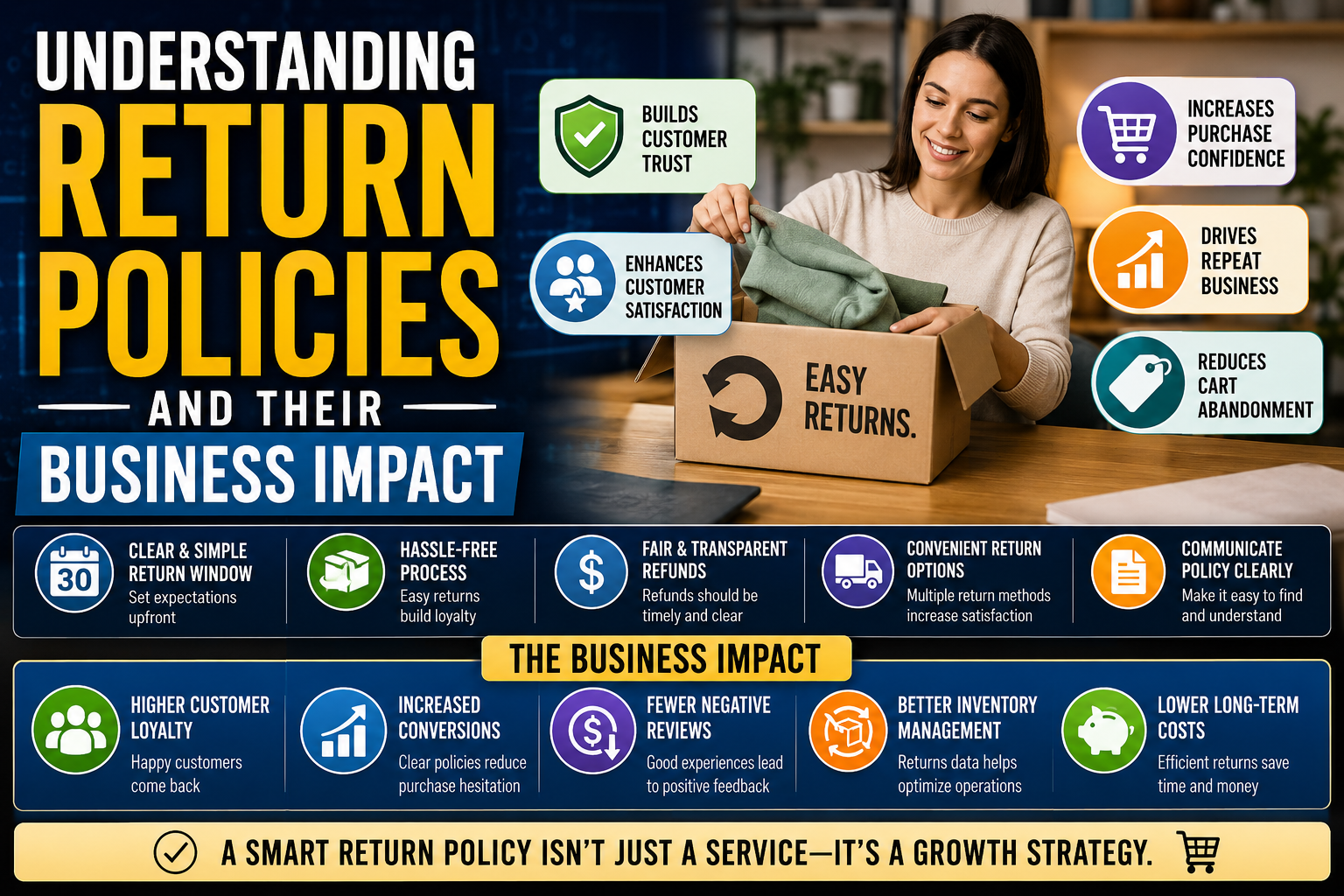
Introduction to Return Policies
- Return policies are critical components of retail strategy, establishing clear guidelines for customers regarding the conditions under which products may be returned or exchanged. They function not only as a framework for post-purchase interactions but also as an essential component of customer service and brand reputation. A well-defined return policy can significantly influence consumer behavior, fostering trust and encouraging sales.
- In essence, return policies serve to protect consumers by providing them with the assurance that they can rectify a purchase decision if necessary. This safety net can make customers feel more confident when making a purchase, knowing they have options should they be dissatisfied with the product. Additionally, an effective return policy enhances customer satisfaction, which is directly linked to repeat business and customer loyalty. When customers experience a hassle-free return process, they are more likely to return to the business in the future, thereby increasing lifetime value.
- Moreover, return policies play a vital role in shaping brand loyalty. Brands that are perceived as customer-centric often enjoy higher levels of consumer trust and loyalty. When customers feel valued and recognized through fair return practices, they are predisposed to recommend the brand to others, which can result in positive word-of-mouth marketing and new customer acquisition.
- Businesses need to strike a balance between lenient return policies that encourage purchases and policies that protect the business from potential losses. To achieve this, many organizations analyze industry standards and consumer expectations to tailor their return policies effectively. Understanding the nuances of return policies not only aids in compliance with consumer protection laws but also positions businesses competitively in a marketplace where customer experience is paramount.
Types of Return Policies
- Return policies play a crucial role in the retail landscape, serving as a framework within which consumers can make purchases with confidence. Businesses typically utilize several types of return policies, each with its unique set of advantages and disadvantages.
- One of the most favorable policies for consumers is the money-back guarantee. This option allows customers to return products for a full refund within a specified period. The primary advantage of this policy is that it builds trust and encourages sales, as customers feel secure knowing they can retrieve their funds if they are not satisfied. However, the downside for retailers is that it may result in a higher percentage of returns, which can impact profitability.
- Another prevalent return policy is the exchange policy, which permits customers to swap their purchased items for different products rather than receiving a cash refund. This type of policy can bolster customer loyalty and encourage additional sales, as consumers may find alternative products that better suit their needs. Nonetheless, the potential disadvantage is that it may lead to inventory challenges, as retailers must manage stock levels effectively to accommodate exchanges.
- Additionally, some retailers offer store credit as a return option, allowing customers to exchange a returned item for credit that can be used for future purchases. This policy can be beneficial for both parties; customers don’t lose their investment, while businesses can retain sales within their ecosystem. However, the challenge lies in ensuring customer satisfaction, as some may feel dissatisfied if they are unable to retrieve cash refunds.
- In essence, understanding these distinct types of return policies is essential for both consumers and retailers. Analyzing the advantages and disadvantages of each can help guide businesses in designing a return strategy that aligns with their brand philosophy while also catering to customer preferences.
Legal Requirements for Return Policies
- Return policies are crucial documents for any retail business, as they outline the conditions under which products can be returned by customers. However, businesses must navigate a complex landscape of legal requirements associated with these policies, which are designed to protect consumer rights. Various federal and state laws govern return policies, and it is important for businesses to ensure compliance to avoid legal repercussions.
- The primary legal framework governing return policies includes consumer protection laws that may vary by jurisdiction. These laws mandate that consumers have the right to return defective or unsatisfactory products, which obliges businesses to clearly communicate their return policies at the point of sale. It is essential for return policies to be written in a transparent and easily understood manner to avoid confusion and potential legal disputes.
- Moreover, the specific requirements can differ significantly depending on the type of product sold. For example, some items, such as electronics, may be subjected to stricter return regulations, including restocking fees and time limitations on returns. In contrast, other items, such as personal care products, may have stricter return restrictions due to hygiene concerns. Businesses must take special care to understand these nuances and craft return policies that reflect compliance with relevant laws.
- An essential aspect of formulating a return policy is the requirement for clarity regarding consumer rights. Any ambiguity can lead to misunderstandings, further complicating customer relations. Therefore, it is advisable that businesses regularly review and update their return policies to ensure they meet any new legal standards and effectively inform customers about their entitlements. By adhering to legal requirements and prioritizing consumer rights in their return policies, businesses can foster trust and improve customer satisfaction, ultimately contributing to a positive brand reputation.
The Impact of Return Policies on Consumer Behavior
- Return policies play a pivotal role in shaping consumer purchasing decisions in today's retail environment. Research indicates that consumers often evaluate return policies before finalizing a purchase, with flexible and customer-friendly return options significantly enhancing their confidence in a brand. A study by the National Retail Federation found that 79% of shoppers check a retailer’s return policy before making a purchase, affirming that transparency and leniency can improve customer trust.
- Furthermore, a well-structured return policy can lead to higher purchase frequency. For instance, retailers that offer hassle-free returns experience a 30% increase in repeat purchases, according to a recent survey conducted by eMarketer. This is largely attributed to the assurance that customers feel when they know they can return items without complications. A robust return policy effectively reduces perceived risk, encouraging consumers to buy more frequently, even for products they may be uncertain about.
- In addition to influencing purchase frequency, the nature of return policies significantly impacts overall consumer satisfaction. Research published in the Journal of Retailing suggests that customers who are satisfied with the return process are 62% more likely to recommend the retailer to others. This word-of-mouth promotion is invaluable, as it contributes to organic growth and brand loyalty. On the other hand, stringent or complicated return processes can lead to negative perceptions of a brand, hampering customer retention and diminishing the likelihood of repeat purchases.
- Ultimately, the impact of return policies extends beyond mere transaction details; they are a critical component of the overall customer experience. By understanding how these policies affect consumer behavior, businesses can craft strategies that enhance customer satisfaction, drive loyalty, and improve their competitive edge in the marketplace.
Return Policies as a Competitive Advantage
- In today’s highly competitive marketplace, return policies have evolved from simple customer service measures into significant strategic tools. Businesses that implement flexible and well-designed return policies often find themselves with an edge over their competitors. Such policies not only foster customer trust but can also drive repeat business, enhance brand loyalty, and improve overall customer satisfaction.
- One prominent example is the retail giant Zappos, renowned for its customer-centric approach. The company offers a 365-day return policy, allowing customers an ample period to change their minds without any pressure. This leniency not only encourages purchases but also builds a positive relationship with clients who feel secure in the decision-making process. Consequently, Zappos manages to gain a reputation not just as a footwear retailer but as a customer-first organization.
- Another noteworthy instance is that of the outdoor apparel brand Patagonia, which has successfully integrated its return policy into its overall brand ethos. Patagonia’s "Worn Wear" program emphasizes sustainability by allowing customers to return items in exchange for store credit or repairs. This policy not only attracts environmentally conscious consumers but also highlights the brand’s commitment to quality and sustainability. Here, the return policy is less about keeping customers satisfied and more about coherently aligning with corporate values, which significantly strengthens its market position.
- Moreover, businesses such as Nordstrom have utilized generous return policies to create memorable customer experiences. Their “no questions asked” return policy encourages consumers to make purchases without fear, essentially functioning as a safety net. This results in higher sales volume and fosters a loyal customer base that perceives value in both the product and the shopping experience.
- Ultimately, in an age where consumers have numerous options readily available, return policies can be effectively leveraged as a competitive advantage. By thoughtfully crafting and promoting these policies, businesses can attract a wider customer base, retain existing clients, and enhance their overall brand reputation in the marketplace.
Challenges Associated with Return Policies
- The implementation of return policies presents various challenges for businesses, which can significantly affect their operational efficiency and profitability. One of the most pressing issues is the occurrence of fraudulent returns. This can happen when customers attempt to take advantage of liberal return policies by returning used or damaged goods. Fraudulent returns not only lead to financial losses but also complicate the processes involved in processing returns and restocking items.
- Another significant challenge businesses face due to return policies is the increase in operational costs. The costs associated with return shipping, handling, restocking, and managing inspections can accumulate quickly. When a high volume of returns occurs, especially in sectors with high return rates like fashion and electronics, these costs can offset any profits generated. Therefore, it is essential for businesses to understand the financial implications tied to their return policies.
- Furthermore, effectively managing inventory in the face of returns can be daunting. When products are returned, it becomes crucial to determine the condition of the item and decide whether it can be restocked for future sale or if it needs to be discounted or thrown away. This requires a proper and efficient logistics system to ensure that inventory levels remain optimal and that returned merchandise is handled quickly to minimize loss.
- To mitigate these challenges, businesses may adopt various strategies. Implementing stricter return criteria can deter fraudulent returns. Utilizing technology, such as inventory management systems, can streamline the return process and improve the accuracy of stock levels. Additionally, providing customers with clear information regarding return policies can help in setting realistic expectations and maintaining customer satisfaction without compromising the business's bottom line.
Best Practices for Crafting an Effective Return Policy
- Creating an effective return policy is crucial for any business aiming to enhance customer satisfaction and loyalty. One of the best practices involves ensuring clarity in your return policy. Customers should be able to easily understand the terms and conditions regarding returns. This includes detailing how long they have to return items, the condition of items eligible for return, and whether there are restocking fees involved. Clear communication minimizes confusion and builds trust with customers.
- Accessibility is another critical factor. Businesses should make their return policies readily available on their website, ideally in several locations such as product pages, the checkout process, and dedicated policy pages. Utilizing simple language free from legal jargon can significantly improve customer comprehension. Additionally, a well-structured FAQ section addressing common return-related queries can further enhance transparency.
- A customer-centric approach is essential for a successful return policy. This means putting yourself in the customer’s shoes and considering how different aspects of your return processes might affect them. Offering flexible return options such as in-store exchanges, return shipping labels, or even extended return windows during holiday seasons can improve customer satisfaction. Moreover, allowing for hassle-free returns can reduce frustration and promote repeat business.
- Furthermore, it is advisable for businesses to implement a feedback mechanism that allows customers to share their experiences with the return process. This could be in the form of surveys or direct communication channels. The insights gained can inform policy adjustments and help identify pain points in the return experience.
- In summary, businesses need to adopt best practices in crafting a return policy that emphasizes clarity, accessibility, and customer-centric features. Such a well-defined and thoughtfully implemented return process not only enhances customer satisfaction but also supports long-term business success.
Technological Advances and Return Policies
- Technology has fundamentally transformed the way businesses manage their return policies, introducing innovative tools and processes that enhance efficiency and customer satisfaction. One of the notable advancements in this domain is the development of sophisticated return management software. These platforms enable retailers to streamline their return processes, making it easier for customers to initiate returns and for businesses to manage and process them efficiently. With these systems, businesses can track return rates, analyze trends, and gain insights into customer behavior, which are crucial for refining their return policies.
- Furthermore, artificial intelligence (AI) is increasingly playing a role in processing returns. AI-driven algorithms can assess return requests, predict potential issues, and even flag suspicious patterns that may indicate return abuse. By automating the decision-making process, companies can expedite returns, reduce the likelihood of human error, and ultimately enhance the customer experience. This technology not only saves time but also improves accuracy, which is vital for maintaining consumer trust.
- Additionally, e-commerce platforms are evolving to better integrate return policies into their frameworks. As online shopping continues to dominate the retail landscape, the necessity for seamless return processes has never been greater. E-commerce giants are adopting features such as easy-to-print return labels, location-based returns, and real-time updates regarding the status of return shipments. These innovations not only simplify the consumer experience but also foster brand loyalty, as customers appreciate hassle-free returns.
- In conclusion, the integration of technology in the management of return policies has significantly improved operational efficiency and customer satisfaction. Businesses that embrace these advancements are likely to see a positive impact on their return rates and overall profitability as they adapt to the ever-changing landscape of retail.
Conclusion: The Future of Return Policies
- In today's retail environment, return policies have become a critical aspect of the customer experience and overall business strategy. As we have discussed throughout this blog post, the evolution of return policies is closely tied to changing consumer trends and market demands. Businesses are increasingly recognizing that a transparent and customer-friendly return policy can drive customer loyalty and improve brand reputation.
- Looking ahead, we can expect return policies to further adapt to the needs of consumers. With the rise of e-commerce and the shifting expectations of shoppers, companies may implement more flexible return strategies. This could include extended return timeframes, the integration of technology for easier returns, and the development of more accommodating return channels, such as in-store returns for online purchases. Innovative approaches may also involve personalized experiences that cater to individual customer preferences.
- The future of return policies will be characterized by a delicate balance; companies will need to protect their bottom line while also ensuring customer satisfaction. This may lead businesses to explore sustainable return solutions that not only minimize costs but also contribute to environmentally friendly practices. As consumers continue to prioritize sustainability, brands that embrace eco-friendly return policies may stand out in a crowded marketplace.
- Ultimately, the landscape of return policies is set to evolve as retailers aim to enhance their competitive advantage. By focusing on the development of adaptive, customer-focused return strategies, businesses can navigate the challenges presented by today’s consumers and secure their positioning for future growth. The ongoing process of evaluating and adapting return policies will be key in meeting the expectations of a diverse and demanding clientele.
Login or create account to leave comments

Comments (0)